 Skip to content

Drain Cleaning & Plumbing in Travis Heights, TX
Root-clogged 1920s sewer laterals, crawlspace drains and creek-side lots handled with care. Call (210) 361-6136.
Trusted By:








EXPERIENCED DRAIN SERVICE IN TRAVIS HEIGHTS, TX
Travis Heights was founded in 1912 by Newning, Swisher and General Stacy, and it filled in through the 1920s on land that already contained something older — Fairview Park, platted in the 1880s by New York investors who laid out winding drives and generous lots in the Olmsted manner. Academy Drive was originally called The Ramble. The neighborhood still runs from Lady Bird Lake down to Oltorf between Congress Avenue and Interstate 35, and it still has the topography that made those curving streets necessary.
Drain Connection at a Glance
⏱️ Response
Same-Day · 24/7
📍 Service Area
Travis Heights, TX
💰 Pricing
Upfront, By the Job
🛠 Focus
Drain & Sewer Specialists
✅ Credentials
Licensed & Insured
⭐ Rating
5-Star on Google
Underneath all of that charm is plumbing from an era when vitrified clay tile in short sections with mortared joints was the standard for a sewer lateral. A century later those joints are the single most reliable source of drain trouble in this neighborhood. Roots find them, ground movement pulls them apart, and a line that was perfectly adequate in 1925 spends the 2020s hosting a tree. Call (210) 361-6136 and we will map the run before anyone reaches for a shovel.

Root Cutting Done Right
Sized cutters that clear the full pipe, not a keyhole.
Historic-Yard Friendly
Locate first, then one small opening instead of a trench.
Crawlspace Capable
Pier and beam under-house drain repairs and re-hangs.
Line It, Don’t Lose It
Trenchless lining that spares mature canopy trees.
Sewer Root Removal
A properly sized cutting head clears the full inner diameter rather than boring a channel through the middle of a root mass. We follow with a flush so the severed material leaves the line instead of re-lodging at the next joint downstream.
Clay Tile Lateral Inspection
Video mapping of the original run from house to street. Short sections and open joints show up clearly on camera, and the locating sonde marks where each defect sits so you can weigh a spot repair against relining the whole run.
Trenchless Pipe Lining
A cured-in-place liner rebuilds the pipe from the inside and seals every joint along the way, which is precisely what a root-plagued clay lateral needs. It also avoids trenching through a front yard that may hold decades-old plantings and mature roots.
Cleanout Installation
Plenty of pre-war houses were built without an accessible exterior cleanout, which turns every service call into a roof vent or pulled-toilet job. Adding one in a sensible spot makes all future work faster and cheaper.
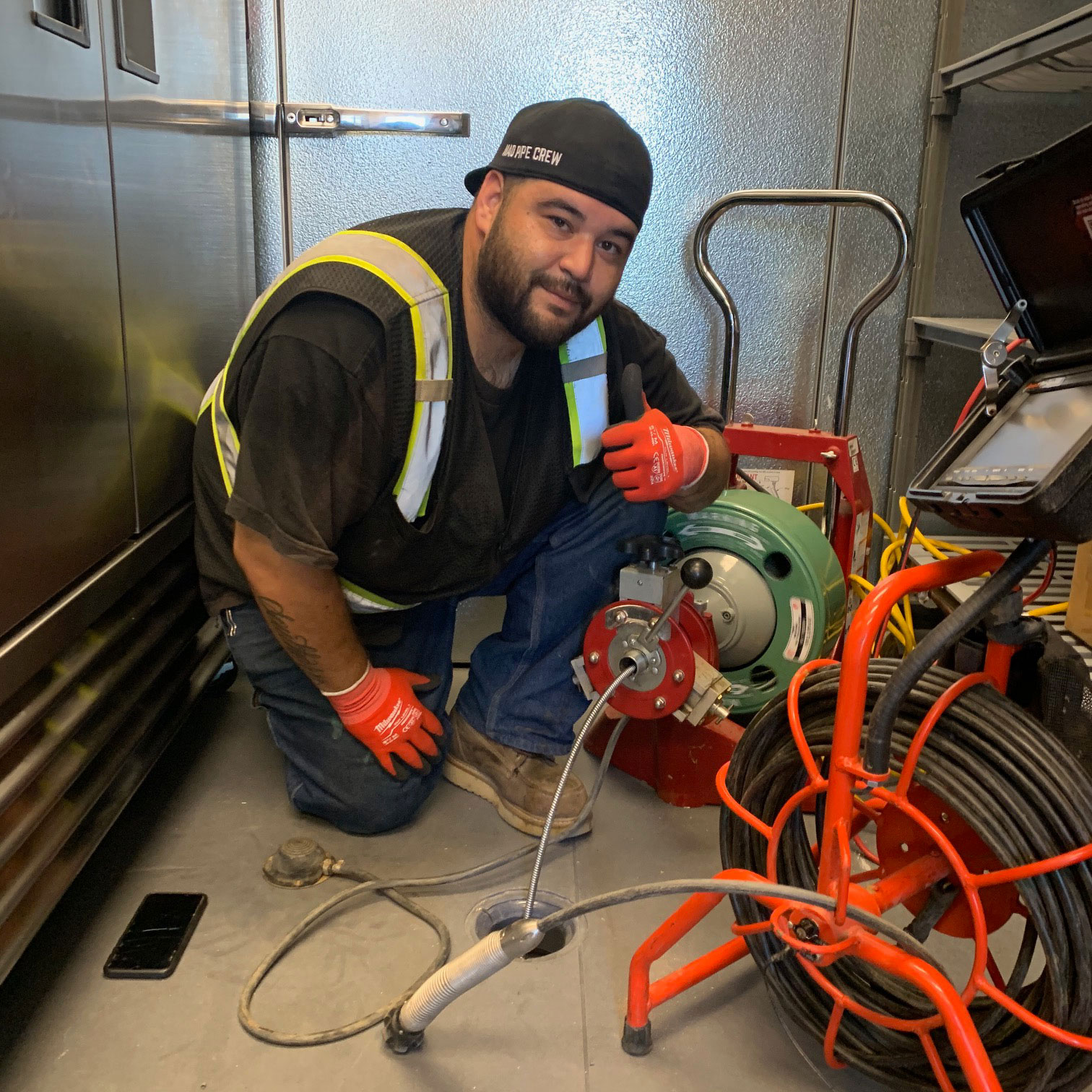
BLUNN CREEK, HILLS AND OLD PIPE IN TRAVIS HEIGHTS, TX
Blunn Creek runs through the middle of the neighborhood, and the land it carved is why the streets curve and why so many houses sit well above or below the road. Stacy Park, given by General Stacy, follows part of that corridor, and the WPA-era Big Stacy and Little Stacy pools sit along it. Further south, the Blunn Creek Nature Preserve covers close to forty acres of that same drainage.
That relief shapes sewer behavior in two directions. Uphill houses have laterals with a long, sometimes aggressive fall to the street, which lets liquid outrun solids. Downhill and creek-adjacent properties sit lower than portions of the collection system around them, so any backup shows up in their lowest fixture first — a basement floor drain, a garden-level shower, a laundry pan.
TRAVIS HEIGHTS, TX HOUSING STOCK AND MATCHING DRAIN SOLUTIONS
| Property Situation | Typical Pipe | Common Failure | Recommended Service |
|---|---|---|---|
| 1910s to 1920s original house | Vitrified clay tile lateral | Root mats at mortared joints | Root cutting then cured-in-place lining |
| Fairview Park era large lot | Long run to the street | Multiple failure points along the run | Full-length camera survey before repair |
| Pier and beam crawlspace | Cast iron and galvanized under floor | Sagging hangers, corroded fittings | Under-house re-hang and section replacement |
| Uphill lot with steep fall | Fast-dropping yard line | Solids settling on the pipe invert | Jetting and periodic maintenance interval |
| Creek-adjacent low lot | Lateral below surrounding grade | Lowest fixture backs up first | Backwater protection review and clearing |
| Renovated home with added bath | New fixtures on original lateral | Capacity shortfall at peak use | Flow assessment and selective replacement |
WHY TRAVIS HEIGHTS, TX SEWER LINES BACK UP
Roots are the headline, and they behave more cleverly than most people expect. A tree does not attack a pipe; it grows toward moisture and nutrients, and a hairline gap at a clay joint leaks exactly that. What enters is thread-fine, invisible on a casual look, and it thickens season after season while catching every piece of paper that passes. By the time a homeowner notices a slow toilet, the mat may already fill most of the bore.
Ground movement is the quieter accomplice. Central Texas clay swells and shrinks with the seasons, and short clay tile sections have no flexibility at all — they simply shift relative to one another until a joint offsets. An offset joint creates a lip that catches solids and a gap that admits more roots, so the two problems compound each other.
Then there is what a hundred years of ownership adds. Old lines have been cut into for additions, tied to by garage apartments, patched with whatever fitting was handy in 1968, and sometimes rerouted around a tree that has since grown over the new path. A camera survey of a full run in this neighborhood commonly reveals three or four distinct eras of work.
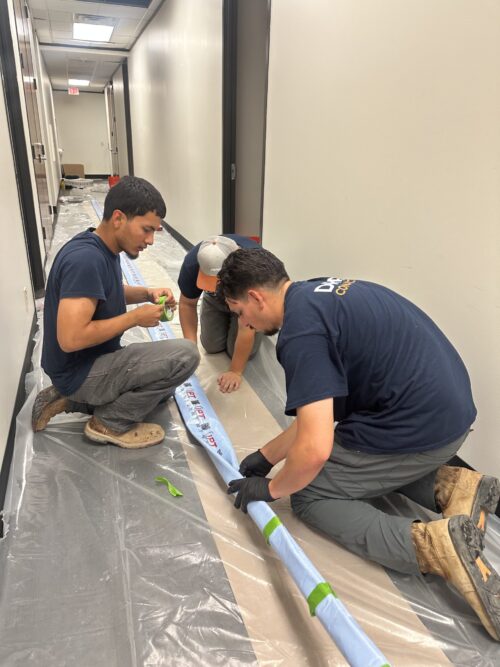
PROTECTING TREES AND YARDS IN TRAVIS HEIGHTS, TX
The canopy is part of why people live here, and it is genuinely worth protecting. Trenching a front yard along the path of a lateral means cutting through the root plate of whatever is growing above it, and a mature shade tree does not always survive that quietly. It may take three summers to show the damage.
Trenchless lining changes the calculation. Because the liner is installed through existing access points and cures in place against the old pipe wall, the surface above stays where it is — lawn, flagstone path, stone edging and roots included. For a jointed clay lateral whose main problem is root entry, sealing every joint at once addresses the cause rather than the symptom.
NEIGHBORHOODS NEAR TRAVIS HEIGHTS, TX WE ALSO SERVE
Travis Heights sits between the lake, the interstate and South Congress, which puts several of our core service areas within a few minutes.
- South Congress (SoCo), TX
- Bouldin Creek, TX
- Downtown Austin, TX
- Zilker, TX
- Barton Hills, TX
- Austin, TX
Our Travis Heights, TX Drain & Sewer Services
Ready for Same-Day Drain Service?
FREQUENTLY ASKED QUESTIONS
How often do Travis Heights homes need root cutting?
It varies with the tree, the pipe and how far the roots have progressed, but properties with original clay laterals and mature canopy often settle into an annual or every-other-year rhythm once roots have found a joint. That interval is a signal rather than a fact of life. If you are cutting roots every year, sealing the joints through a liner generally costs less over ten years than a decade of maintenance visits.
Will lining my sewer line hurt the trees in my yard?
No, and avoiding harm to trees is one of the main reasons to choose it. The liner goes in through an existing cleanout or a small access pit and cures against the inside of the old pipe, so the soil column and the root plate above the line are never opened. Compare that to trenching the same route, which severs whatever roots cross the trench and can put a mature tree into a decline that shows up years later.
My house has no outside cleanout. Is that a problem?
It is an inconvenience that becomes a cost. Without an accessible cleanout, every service call has to enter the drain system through a pulled toilet or a roof vent, which adds time, limits which machines can be used, and makes camera work harder. Many houses from this era were simply never given one. Installing a cleanout at a sensible point near the foundation is a modest job that pays for itself the second time you need service.
Why does my lowest bathroom flood when everything upstairs drains fine?
Because water finds the lowest opening. On the sloped lots around Blunn Creek, plenty of homes have a garden-level bath, a laundry pan or a floor drain sitting below the rest of the fixtures. When the main line is restricted, waste backs up to the lowest point of relief and exits there while the upper fixtures still appear normal. It is a reliable indicator that the problem is in the main line rather than in the fixture that overflowed.
Can you repair a sewer line under a historic Travis Heights property?
Yes. Nearly all of our work is inside the pipe — cabling, jetting, camera locating and lining — which leaves structures and site features untouched. Where excavation is genuinely required, precise locating lets us open one small area rather than exploring. If your property sits within the recognized historic district, tell us when you call so we can plan an approach that keeps surface disturbance to the minimum.
Is a sewer inspection worth it before buying in Travis Heights?
In this neighborhood it is close to essential. A general home inspection does not put a camera in the lateral, and the housing stock here is old enough that original clay pipe is the default assumption rather than the exception. An hour of video tells you the material, the joint condition, whether roots are established and how deep the line runs, which converts a vague worry into a number you can negotiate with.
REQUEST DRAIN CLEANING IN TRAVIS HEIGHTS
Roots in the line again in Travis Heights, TX? Call (210) 361-6136 and let’s end the cycle.
Get your lateral on video before the next backup, not after.
Drain Connection — trenchless sewer repair in Travis Heights, San Antonio, TX.